The Malta Chamber of SMEs is concerned by comments made by Minister Clyde Caruana, attributing Malta’s productivity challenges primarily to employers choosing cheaper labour over capital investment.
While businesses undoubtedly have a responsibility to invest, innovate and improve efficiency, it is unfair and overly simplistic to place the burden of Malta’s productivity challenge predominantly on employers.
Productivity is also heavily influenced by the environment in which businesses are expected to operate.
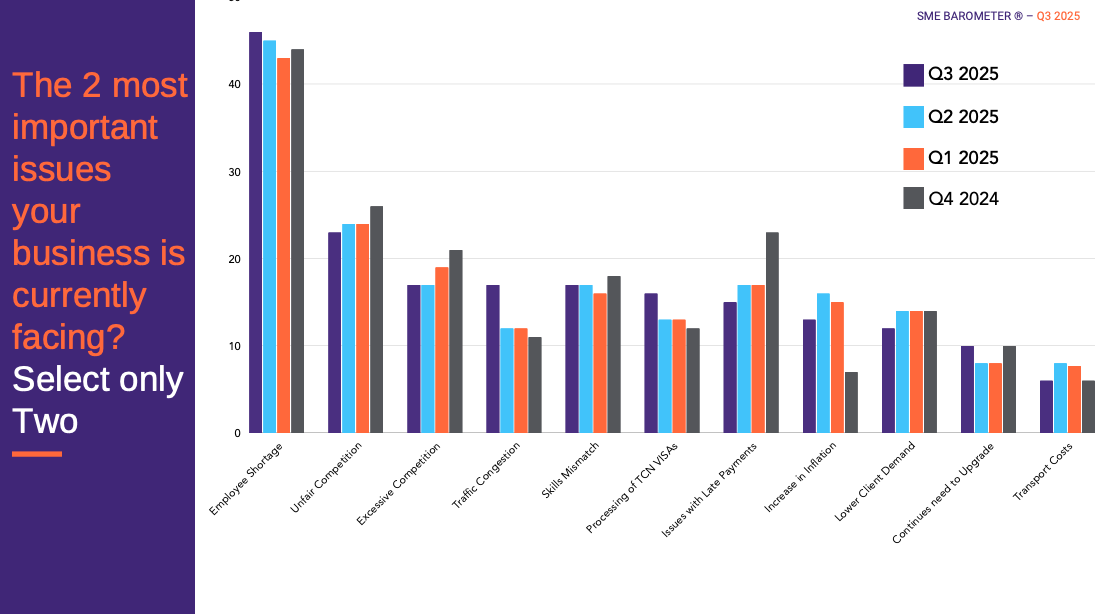
As highlighted in the Malta Chamber of SMEs’ Budget Proposals 2027, improving productivity requires more than investment in technology. It also depends on efficient regulation, accessible skills, effective workforce management and public services that support businesses rather than burden them. The proposals specifically identify traffic, skills mismatch, unfair competition and over-regulation as factors contributing to lower productivity.
Every hour spent dealing with duplicated paperwork, unnecessary administrative procedures, regulatory delays or a lack of coordination between public entities is an hour taken away from productive business activity.
Rather than merely pointing towards the problem, the Malta Chamber of SMEs has put forward a comprehensive set of proposals for Budget 2027 aimed specifically at improving productivity. These include a Mandatory SME Test for new laws, regulations and major administrative procedures, a Regulatory Stocktake, implementation of the Once-Only Principle so that businesses are not repeatedly asked for the same information by different public authorities and a Productivity Tech Kit to help micro and small businesses adopt digital tools and more efficient systems.
The SME Chamber has also proposed measures to encourage productive investment and reinvestment, together with policies aimed at fair competition, improved enforcement, energy efficiency, transport and mobility. The overall objective is to create the conditions that allow businesses to invest, innovate and grow sustainably.
The SME Chamber has also proposed the establishment of a cross-party taskforce on Malta’s long-term priorities to identify the country’s main challenges, agree on a common way forward and provide greater continuity on reforms extending beyond a single electoral term. This is the type of mature and coordinated approach that Malta’s productivity challenge requires.
Businesses must play their part, but productivity is a shared national responsibility. If we genuinely want to invest more in technology, automation and capital, we must also remove the regulatory, administrative and infrastructural obstacles that consume productive time and discourage investment.