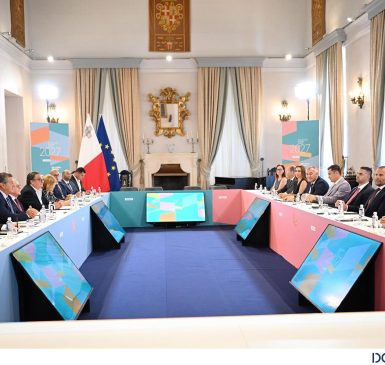
SME Chamber presents 40 Budget 2027 proposals, calls for productivity-driven budget and cross-party taskforce on Malta’s National priorities
16 September 2026
The Malta Chamber of SMEs has presented 40 proposals for Budget 2027 during a meeting...

Large European companies will now be
required to have higher female representation on corporate boards following the
European commission's approval of a proposal which requires that women account
for 40% of non-executive directors listed on EU stock exchanges. Private companies will have until
2020 to achieve this goal, while public companies will have until 2018.
European justice commissioner Viviane
Reding had to postpone the launch of the policy last month when warned by EU
lawyers that compulsory quotas might not be enforceable, while others are
arguing that the directive had been watered down and would be largely ignored.
While the new EU-wide plan however does not in fact set mandatory quotas, as an
early draft proposal suggested, it will introduce a range of administrative
burdens to coerce companies to abide by the guidelines.
Companies will have to prove they are
trying their best to increase the number of women in top management positions
by setting their own transparent mechanisms for selecting new board members and
reporting annually on their progress.
Not all Member States and
stakeholders agreed with this proposal arguing that the way to do this is not
through special treatment or regulation like the European commission's quotas
idea, which patronises women and undermines the business case. It is about
removing the barriers to achieving women's goals, so that women are supported
all the way from the shop floor to the boardroom.
16 September 2026
The Malta Chamber of SMEs has presented 40 proposals for Budget 2027 during a meeting...

11 September 2026
The Malta Chamber of SMEs is raising serious concerns over the impact of the new...
22 July 2026
The Malta Chamber of SMEs acknowledges the significant investment and continuous efforts undertaken over recent...
The Malta Chamber of SMEs represents over 7,000 members from over 90 different sectors which in their majority are either small or medium sized companies, and such issues like the one we're experiencing right now, it's important to be united. Malta Chamber of SMEs offers a number of different services tailored to its members' individual requirements' and necessities. These range from general services offered to all members to more individual & bespoke services catered for specific requirements.
A membership with Malta Chamber of SMEs will guarantee that you are constantly updated and informed with different opportunities which will directly benefit your business and help you grow. It also entails you to a number of services which in their majority are free of charge and offered exclusively to its members (in their majority all free of charge).