Malta Chamber of SMEs meets Opposition Leader ahead of Budget 2027
08 October 2026
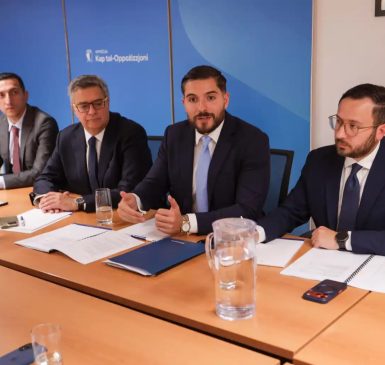
Ahead of the Budget 2027, council members of the Malta Chamber of SMEs met earlier...
New rules on pay transparency have now come into force in Malta as part of the implementation of the EU’s Pay Transparency Directive.
The changes are intended to strengthen the principle of equal pay for equal work and to make it easier for employees and job applicants to understand how salary decisions are made. While some of the reporting obligations introduced in the regulations only apply to larger organisations, other changes will affect businesses of all sizes, including small and medium-sized enterprises. One of the most significant changes concerns recruitment. Employers must, from now on, provide job applicants with information about the salary or the salary range for a position before the recruitment process is concluded. This information may be included in vacancy advertisements or provided during the recruitment process to enable informed salary decisions.
Employers are now also prohibited from asking applicants about their current or previous salary history. The aim is to ensure that salary decisions are based on the requirements of the role and on objective criteria rather than on an individual’s previous earnings. Furthermore, employers are required to ensure that job vacancy notices, job titles and recruitment processes are gender-neutral and free from discrimination. The legislation also offers employees greater transparency regarding salaries. Workers may request information about their own salary and how it compares, on average, with that of colleagues performing the same work or work of equal value, with the information provided being broken down by gender. Employers are also obliged to remind employees of this right on an annual basis and may not restrict workers from discussing or disclosing details of their own salary. Importantly, the regulations do not require all employees performing the same role to receive identical salaries. Differences in salaries may still be justified where they are based on objective factors such as performance, competence, experience, qualifications, responsibilities or other legitimate business considerations. The regulations also introduce obligations regarding salary policies.
Employers are expected to maintain objective and gender-neutral criteria governing salary levels and salary progression. While employers with fewer than fifty employees benefit from certain exemptions relating to formal salary progression policies, businesses employing twenty-five or more workers must still, internally document the criteria used to determine salary and salary progression. The most widely publicised aspect of the new rules concerns gender pay gap reporting, however, these obligations only apply to employers with at least one hundred employees. Employers with fewer than one hundred employees are not required to submit gender pay gap reports, although they may choose to do so voluntarily. For larger employers, reporting obligations will apply on a phased basis depending on workforce size. In certain circumstances, employers may also be required to carry out a joint salary assessment where a significant and unjustified gender pay gap is identified. As a practical first step, businesses should review their recruitment procedures, employment contracts and salary setting practices and ensure that differences can be justified by objective criteria, that any restrictions on salary discussions are removed, and that appropriate records are maintained.
This article provides a general overview of the legislation and should not be regarded as legal advice.
The Malta Chamber of SMEs will be hosting a webinar on this subject on the 18th June 2026.
Legal experts will be available to explain in further detail and to answer questions. Click here to register.
Article by Marcel Mizzi
Senior Officer, Malta Chamber of SMEs
08 October 2026
Ahead of the Budget 2027, council members of the Malta Chamber of SMEs met earlier...

08 October 2026
The Malta Chamber of SMEs is concerned by comments made by Minister Clyde Caruana, attributing...

17 September 2026
It is with great sadness that we remember Joe Attard, CEO of Green MT Limited...
The Malta Chamber of SMEs represents over 7,000 members from over 90 different sectors which in their majority are either small or medium sized companies, and such issues like the one we're experiencing right now, it's important to be united. Malta Chamber of SMEs offers a number of different services tailored to its members' individual requirements' and necessities. These range from general services offered to all members to more individual & bespoke services catered for specific requirements.
A membership with Malta Chamber of SMEs will guarantee that you are constantly updated and informed with different opportunities which will directly benefit your business and help you grow. It also entails you to a number of services which in their majority are free of charge and offered exclusively to its members (in their majority all free of charge).