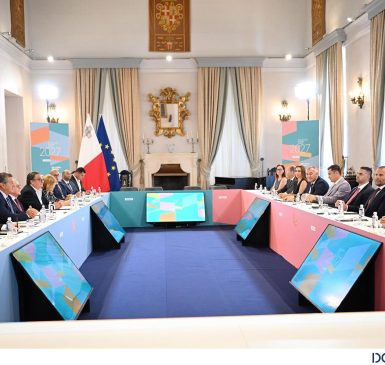
SME Chamber presents 40 Budget 2027 proposals, calls for productivity-driven budget and cross-party taskforce on Malta’s National priorities
16 September 2026
The Malta Chamber of SMEs has presented 40 proposals for Budget 2027 during a meeting...

With increased
globalisation comes the need to translate language and services to be
recognisable across countries and continents. Two such examples, the IBAN and
BIC, deal with the banking sector and facilitate swifter electronic
transactions. An IBAN (International Bank Account Number) is a series of up to
34 alphanumeric characters that was established in order to standardise the
identification of bank accounts worldwide.
Thus the
IBAN allows bank accounts to be recognised from anywhere in the world in order
to allow international payments to and from Europe, including the 34 Single
Euro Payments Area (SEPA) countries. The existing bank account numbers are not
replaced as the IBAN simply adds more characters. Along with the IBAN, the BIC
(Bank Identifier Code) is another important code that is composed of either
8-11 alphanumeric characters. These codes allow customers to effect payments
electronically and therefore problems arise when service providers fail to
display their IBAN and BIC on the invoices they issue.
Article
4(4) of EC Regulation 924/2009 states that:
"Where appropriate, with regard to the nature of the payment
transaction concerned, for all invoicing of goods and services in the
Community, a supplier of goods and services that accepts payments covered by
this Regulation shall communicate its IBAN and the BIC of its payment service
provider to its customers."
This
Regulation has since been amended by Regulation 260/2012, which states that 1
February 2014 was the set deadline in the euro area for compliance with the
Regulation's core provisions. For countries external to the euro area the
deadline will be 31 October 2016. In most SEPA countries, a national website
dedicated to SEPA is available. The Malta Bankers' Association provides useful
information on SEPA at the following link: http://www.maltabankers.org/sepa?l=1.
16 September 2026
The Malta Chamber of SMEs has presented 40 proposals for Budget 2027 during a meeting...

11 September 2026
The Malta Chamber of SMEs is raising serious concerns over the impact of the new...
22 July 2026
The Malta Chamber of SMEs acknowledges the significant investment and continuous efforts undertaken over recent...
The Malta Chamber of SMEs represents over 7,000 members from over 90 different sectors which in their majority are either small or medium sized companies, and such issues like the one we're experiencing right now, it's important to be united. Malta Chamber of SMEs offers a number of different services tailored to its members' individual requirements' and necessities. These range from general services offered to all members to more individual & bespoke services catered for specific requirements.
A membership with Malta Chamber of SMEs will guarantee that you are constantly updated and informed with different opportunities which will directly benefit your business and help you grow. It also entails you to a number of services which in their majority are free of charge and offered exclusively to its members (in their majority all free of charge).