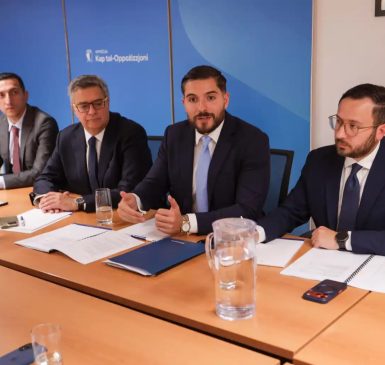
Malta Chamber of SMEs meets Opposition Leader ahead of Budget 2027
08 October 2026
Ahead of the Budget 2027, council members of the Malta Chamber of SMEs met earlier...

In a typical businessman’s mind the words energy audit, trigger the dread of inspections, paperwork and unnecessary administrative work. In reality, an energy audit a practical business tool that could help identify where and how energy is being used, where it could possibly be wasted, and where improvements can be made which should result in reducing operating costs.
This was one of the key messages that emerged during a recent panel discussion organised by the Energy and Water Agency, during which the new Energy Performance Assessment Scheme was launched. The Malta Chamber of SMEs was part of this panel discussion. Through the new scheme businesses with average energy consumption may benefit from a free service that includes on-site visits by qualified professionals, tailored recommendations, and follow-up support where required. Businesses within the higher consumption brackets may make use of financial incentives towards the cost of carrying out a professional assessment. In this context, it is important to note that energy consumption includes fuel used for transportation or otherwise.

One of the most important observations made during the discussion was that the term SME covers an incredibly diverse range of businesses. A manufacturing company, a hotel or a supermarket will naturally have a very different energy profile from a neighbourhood retailer, a small professional office, a hairdresser or a mobile phone repair shop. While all businesses can benefit from using energy more efficiently, the potential savings and the type of recommendations will vary considerably.
For businesses with significant energy consumption, energy audits can identify opportunities that lead to substantial reductions in operating costs. For smaller businesses, the recommendations may be simpler and more focused on improving day-to-day efficiency rather than a major capital investment.
One of the strongest conclusions from the discussion was that the success of an energy audit should not be measured by the report that is produced. The real measure of success is what happens afterwards. An energy audit may identify opportunities to improve lighting, replace ageing air-conditioning systems, optimise equipment or introduce better operating practices. However, these recommendations only deliver value if they are implemented and this is often a considerable challenge for SMEs, especially micros.
Business owners make investment decisions every day, balancing limited financial resources against many competing priorities. Investing in new equipment, upgrading technology, expanding premises, recruiting staff or purchasing stock all compete with energy efficiency projects and admittedly, the lattrr are not at the top of the list.
On the other hand, this does not mean that businesses are unwilling to invest in reducing energy consumption. Rather, it reflects the reality that every investment decision must be considered alongside the many other demands placed on a growing business. Many small businesses already make improvements that result in energy efficiency by default. When equipment, lighting, air conditioning and so on fail, most enterprises replace them with today’s energy efficient models.
One message that resonated throughout the discussion was that recommendations need to be practical, realistic and prioritised. Business owners are not necessarily looking for the longest or most technical report. They need clear guidance such as What should we do first?, How much will it cost? How much can we expect to save? How long will it take to recover the investment? Assessors need to speak in terms that business people understand like competitive advantage, cost, return, risk and payback as opposed to using terms like kWh, efficiency, load factors and COP.
From the Chamber’s perspective, the objective is clear. Energy performance assessments should help businesses make informed decisions, reduce unnecessary operating costs and improve long-term resilience. Whether a business is large or small, every euro saved through greater efficiency is a euro that can be invested back into the business.
Article by Mr Marcel Mizzi – Officer
08 October 2026
Ahead of the Budget 2027, council members of the Malta Chamber of SMEs met earlier...
08 October 2026
The Malta Chamber of SMEs is concerned by comments made by Minister Clyde Caruana, attributing...

17 September 2026
It is with great sadness that we remember Joe Attard, CEO of Green MT Limited...
The Malta Chamber of SMEs represents over 7,000 members from over 90 different sectors which in their majority are either small or medium sized companies, and such issues like the one we're experiencing right now, it's important to be united. Malta Chamber of SMEs offers a number of different services tailored to its members' individual requirements' and necessities. These range from general services offered to all members to more individual & bespoke services catered for specific requirements.
A membership with Malta Chamber of SMEs will guarantee that you are constantly updated and informed with different opportunities which will directly benefit your business and help you grow. It also entails you to a number of services which in their majority are free of charge and offered exclusively to its members (in their majority all free of charge).