SME Chamber presents 40 Budget 2027 proposals, calls for productivity-driven budget and cross-party taskforce on Malta’s National priorities
16 September 2026
The Malta Chamber of SMEs has presented 40 proposals for Budget 2027 during a meeting...

GRTU is currently working on a formal
request which it will be presenting to Government for the setting up of a
National Skills Council for Commerce. This is now long overdue, especially now
that the European Commission DG Employment has given the green light for the
setting up of the EU Sector Skills Council for Commerce.
As a major provider of employment in
Europe, the commerce sector recognises the need to increase the average level
of qualifications. The Sectoral Skills Council aims at addressing this
shortfall in level of qualifications and skills mismatching. The Commerce sector is therefore one
of the key sectors selected by the EU Commission to benefit from its support
for launching the activities of a European Skills Council for Commerce. Commerce
is also the second EU Sectoral Skill Council to be launched in Europe after the
Textile and Clothing industry.
GRTU has steadfastly been demanding
more attention to skills training in this sector also because most GRTU members
are in Commerce and therefore we give our full support to EuroCommerce in the
signing of this agreement.
GRTU's Director General Vincent
Farrugia participated this week in the final conference of the Eurocommerce and
UNI Europa project "Establishing a European Sector Council for Commerce on
employment and skills". The event
was an occasion to present the structure of the network, the results of the
interviews with national observatories, the new electronic platform to be
launched as a support, as well as the expected outcomes, governance and
expectations of the European Skills Council and the role of the various
stakeholders.
"GRTU demands specific and
concrete action because it is no longer acceptable that Malta ranks with the
worst in skills training in this sector among EU Member States." The reports so
far show a very bad picture. The latest Small Business Act fact sheet outlines
skills as one of the areas where Malta lags behind. According to statistics
they have of 2010 the report says there has been little change from the previous
year and Malta remains below the EU average in this area. The figures available
for "Training and skills development" also point to some challenges
in this area. The report outlines that in Malta, only 46% of micro-firms
provided training for their employees in 2010, whereas the EU average was more
than 58%. As regards the IT capability of Malta´s SMEs, the results are
inconclusive, but they still point to further potential in this area,
especially given the fact that 20% of SMEs' purchase on-line, compared to 28%
in the EU.
The country report on skills also gives
a very bad impression of what is the progress Malta has achieved in the area.
GRTU therefore expects a serious dialogue on the issue so that within short
time we will be in a position of reaching an agreement on the
establishment of the Council. Only then will Malta be able to form part of the
emerging European Sectoral Skills Council for Commerce.
GRTU is currently in consultation with its members and other
interested parties to formulate a policy doc that would be presented to
Government as a basis for the establishment of the Council. GRTU invites
all members in the Commerce sector to give their views.
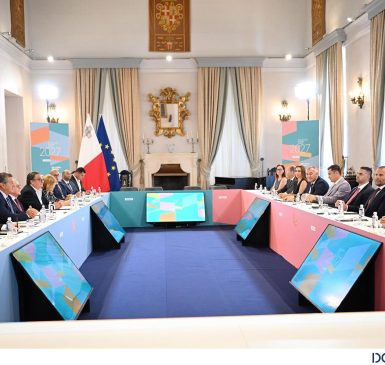
16 September 2026
The Malta Chamber of SMEs has presented 40 proposals for Budget 2027 during a meeting...

11 September 2026
The Malta Chamber of SMEs is raising serious concerns over the impact of the new...
22 July 2026
The Malta Chamber of SMEs acknowledges the significant investment and continuous efforts undertaken over recent...
The Malta Chamber of SMEs represents over 7,000 members from over 90 different sectors which in their majority are either small or medium sized companies, and such issues like the one we're experiencing right now, it's important to be united. Malta Chamber of SMEs offers a number of different services tailored to its members' individual requirements' and necessities. These range from general services offered to all members to more individual & bespoke services catered for specific requirements.
A membership with Malta Chamber of SMEs will guarantee that you are constantly updated and informed with different opportunities which will directly benefit your business and help you grow. It also entails you to a number of services which in their majority are free of charge and offered exclusively to its members (in their majority all free of charge).