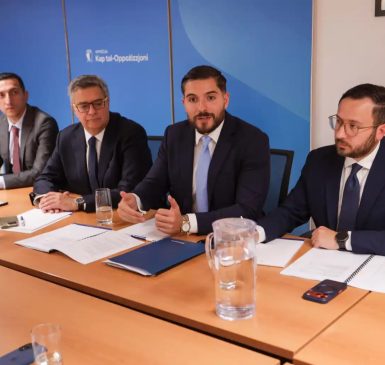
Malta Chamber of SMEs meets Opposition Leader ahead of Budget 2027
08 October 2026
Ahead of the Budget 2027, council members of the Malta Chamber of SMEs met earlier...
 Vince Farrugia, Director General GRTU, Tuesday, made a strong appeal to Mr. Zoltán Kazatsay, EU Commission, Deputy Director General, Energy and Transport to seek a solution to the problem caused by the high cost of diesel.
The increase in the price of diesel has had a 15% rise in the cost of distribution and transport to the retail trade sector across the whole of the EU with the result that traders, wholesalers and retailers had to put up prices to meet the extra cost. The increase in distribution costs is in addition to the increase in prices for food and other daily consumption items and it adds to the increasing inflationary pressures suffered by the EU member states.
In the meantime governments of all EU Member States continue to impose taxes, excise duty, and VAT on top of these taxes, that pushes the price of diesel to the distributive and Transport trade by up to 50% of what the price per litre could be without the taxation burden. The Commission imposes a minimum excise tax and member states are forced to top up the already high price for every litre of diesel with this additional tax burden. The high increase in the price of diesel is therefore also a EU imposed one. The level of taxation imposed by Member States governments varies. Malta stands at a 19th position with 8 Member states carrying a lesser Tax burden while 18 countries carry a higher Tax burden per litre of fuel. This taxation element is reflected in the 15% increase in the higher costs of the distributive trades and represents an additional burden that the Commercial Sector has to suffer or impose on retailers and onwards on the consumers. "The COMMISSION should immediately, and substantially, lower this minimum taxation level to mitigate for the sharp rise in the price of diesel and direct Member States to reduce additional taxation and the double sufferance of Vat on fuel taxation". Recommended GRTU's Director General.
"It is right for the EU Commission to strive to take measures to ensure more energy saving, less CO2 emissions, seek alternative energy provisions and achieve greater use of public Transport and to fight inflation, but action is stronger than words. The reduction of taxation per litre of fuel used in transportation and distribution is direct action that is within the control of the COMMISSION and Member State governments. Consumers everywhere expect prices to come down but they will not unless direct action is taken to reduce the burdens imposed on the distributive and retail trade" concluded Vince Farrugia.
He was addressing the Annual Conference of EuroCommerce in Brussels Tuesday 10th June 2008 after Mr. Zoltàn Kazatsay addressed the Conference on the Program of the EU COMMISSION to reform the transportation and logistics sector in Europe to meet the new energy saving and efficiency criteria to meet the targets for 2020.
08 October 2026
Ahead of the Budget 2027, council members of the Malta Chamber of SMEs met earlier...
08 October 2026
The Malta Chamber of SMEs is concerned by comments made by Minister Clyde Caruana, attributing...
17 September 2026
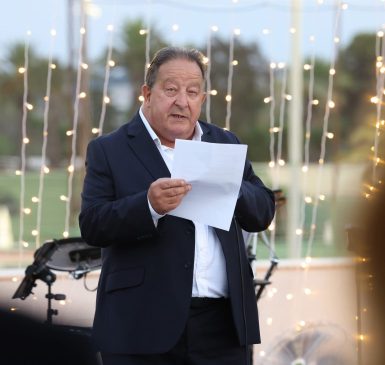
It is with great sadness that we remember Joe Attard, CEO of Green MT Limited...
The Malta Chamber of SMEs represents over 7,000 members from over 90 different sectors which in their majority are either small or medium sized companies, and such issues like the one we're experiencing right now, it's important to be united. Malta Chamber of SMEs offers a number of different services tailored to its members' individual requirements' and necessities. These range from general services offered to all members to more individual & bespoke services catered for specific requirements.
A membership with Malta Chamber of SMEs will guarantee that you are constantly updated and informed with different opportunities which will directly benefit your business and help you grow. It also entails you to a number of services which in their majority are free of charge and offered exclusively to its members (in their majority all free of charge).