Malta Chamber of SMEs calls for a long-term business resilience framework following power outage
22 July 2026
The Malta Chamber of SMEs acknowledges the significant investment and continuous efforts undertaken over recent...

In February 2007 the European Commission asked EFSA to provide scientific opinion on the food safety, animal health, animal welfare and environmental implications of animal clones, obtained through somatic cell nucleus transfer (SCNT) technique, of their progeny and of the products obtained from those animals.
One of the main conclusions was that cloning has major impacts on the health and welfare of cloned animals, but not on the offspring since the offspring are obtained from conventional reproduction. The risk that a cloned animal is ill is 40% and their mortality is 4 times more.
BEUC was concerned by the numbers of unhealthy animals and asked how EFSA could feel comfortable drawing conclusions while having only limited data available.
EFSA responded that no method of reproduction, not even the conventional one, produces only healthy animals. The numbers and figures mentioned during the meeting regarding the healthy/sick proportion (60/40%) as well as the effects on the health and welfare (0-40% negative effects) relates only to cloned animals. Their offspring needs to be assessed in order to see if it is healthy or not. Sick/unhealthy animals must be removed from the food supply chain. Regarding food safety, concerns are unlikely. Before approval for human consumption an extra control regarding food safety must be carried out.
The Commission has launched a Eurobarometer study seeking the public's opinion on cloning techniques and on food deriving from cloned animals and/or their offspring.
The European Group on Ethics (EGE) is also asked to deliver an opinion on the issue's ethical considerations. The Commission will conduct an extensive consultation with the different stakeholders, the Member States and the European Parliament and will also consider whether any other action may be necessary.
EFSA made some recommendations to the Commission such as:
The health and welfare of clones should be monitored during their production life and natural life span.
As food animals other than cattle and pigs have also been produced via SCNT, risk assessments should be performed on these species when relevant data become available.
22 July 2026
The Malta Chamber of SMEs acknowledges the significant investment and continuous efforts undertaken over recent...
16 July 2026
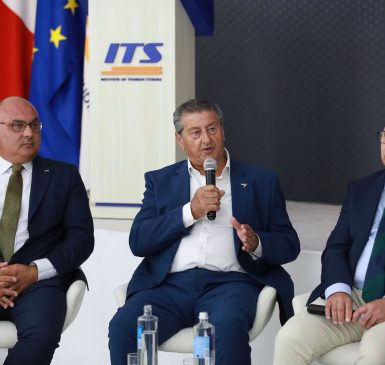
The President of the Malta Chamber of SMEs, Mr Paul Abela, participated in a panel...
10 July 2026
In a typical businessman’s mind the words energy audit, trigger the dread of inspections, paperwork and...
The Malta Chamber of SMEs represents over 7,000 members from over 90 different sectors which in their majority are either small or medium sized companies, and such issues like the one we're experiencing right now, it's important to be united. Malta Chamber of SMEs offers a number of different services tailored to its members' individual requirements' and necessities. These range from general services offered to all members to more individual & bespoke services catered for specific requirements.
A membership with Malta Chamber of SMEs will guarantee that you are constantly updated and informed with different opportunities which will directly benefit your business and help you grow. It also entails you to a number of services which in their majority are free of charge and offered exclusively to its members (in their majority all free of charge).