Malta Chamber of SMEs calls for a long-term business resilience framework following power outage
22 July 2026
The Malta Chamber of SMEs acknowledges the significant investment and continuous efforts undertaken over recent...
Workshop 3 : Health and Safety issues 
a) no additional bureaucratic burdens
b) easily understood legislation
c) preparation of guidance in implementation
d) dissemination of information-easily accesible information
– Prime motivator should be the knowledge that improving health and safety is integral to business risk management, while benefits include a mix of both tangible and intangible benefits, such as maintenance of reputation, client requirements, controlling insurance premium costs, reduction in absence rates as well as general improvements in health and safety.
Questions that need to be answered:
The workshop included persons from private organisations, public and NGO's.
A discussion took place about the relationship between employers and employees and what is and what is not construed at law as a contract of employment.
As the business environment is changing so are risks. New risks are emerging that must be taken care of.
Stress and other mental illnesses are also an issue that need to be addressed but the OHSA is not getting involved in these because of limited resources.
All participants agreed that there is a need for greater awareness and training in health and safety matters.
Some participants argued that they have done everything possible to make the environment at work as healthy and safe as possible but the culture of the employees is one where they do not follow instructions and wear equipment. It is difficult to fire workers that do not follow health and safety rules becuase some of the workers are difficult to replace. Everytone agreed that a culture change among workers was necessary.
It was also clear that health and safety matters is not high on the agenda of business people. They perfer to discuss matters such as access to finance, marketing, cutting red tape and bureaucracy and so on.
Resources are required to implement health and safety at work. Micro and small organisations found it difficult to allocate resources to this subject.
22 July 2026
The Malta Chamber of SMEs acknowledges the significant investment and continuous efforts undertaken over recent...
16 July 2026
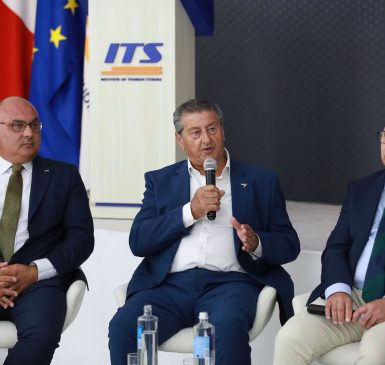
The President of the Malta Chamber of SMEs, Mr Paul Abela, participated in a panel...
10 July 2026
In a typical businessman’s mind the words energy audit, trigger the dread of inspections, paperwork and...
The Malta Chamber of SMEs represents over 7,000 members from over 90 different sectors which in their majority are either small or medium sized companies, and such issues like the one we're experiencing right now, it's important to be united. Malta Chamber of SMEs offers a number of different services tailored to its members' individual requirements' and necessities. These range from general services offered to all members to more individual & bespoke services catered for specific requirements.
A membership with Malta Chamber of SMEs will guarantee that you are constantly updated and informed with different opportunities which will directly benefit your business and help you grow. It also entails you to a number of services which in their majority are free of charge and offered exclusively to its members (in their majority all free of charge).