Press Release: New EU Packaging Rules Exclude Small Businesses from the Single Market
11 September 2026
The Malta Chamber of SMEs is raising serious concerns over the impact of the new...
Sourcing of new talent remains one of the main areas companies focus on in today’s fast moving talent market. An equally critical and often undervalued area lies in retaining the talent you already have. Employee retention is not just a “nice to have”, it is a strategic investment with measurable ROI, and aligning recruitment and the HR functions is key to unlocking it. The metrics from misco’s latest reports show how tightly recruitment, HR and retention need to work together to deliver business value.
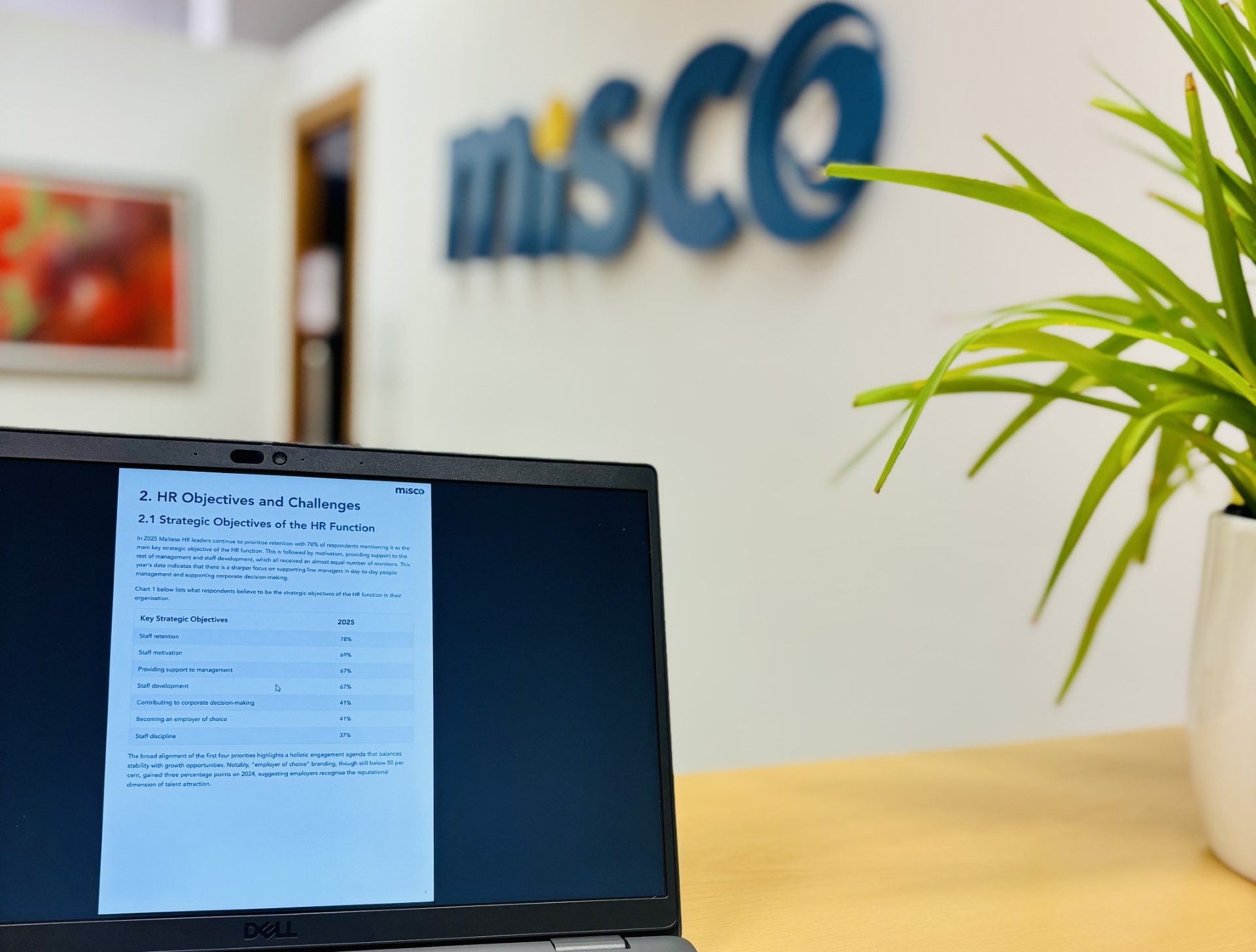
When employees stay, organisations benefit in multiple ways: reducing hiring and onboarding costs, faster productivity, stronger culture and continuity, and improved employer brand. In the latest misco survey on HR Developments issued in 2025, misco found 78% of Maltese HR leads cited staff retention as the main strategic objective for their function. The cost of losing talent is significant; the desire to retain it is clearly expressed by Maltese HR leaders; and yet many organisations still face high turnover and voluntary exits.
To turn retention into a business advantage, recruitment and HR must work together. Recruitment is not just about filling vacancies. It is about finding the right people whose values and motivations align with the organisation. When recruiters engage candidates with clarity around culture, career path and expectations, HR’s job of retaining that talent becomes far easier. Despite efforts in recruitment, many organisations still face significant recruitment challenges. In misco’s 2025 HR Developments survey, 66% of employers cited lack of experienced applicants as a key reason for recruitment difficulties and 61% cited salary demands.
What does this mean for retention? If recruitment selects people based purely on “can they fill the seat” rather than “will they stay and thrive”, you expose yourself to turnover risk. So:
HR functions must move beyond the operational: policies, salaries and benefits alone won’t deliver retention. HR needs to drive engagement, development and culture by establishing meaningful onboarding and induction programmes to ensure that new employees feel connected, supported and productives from day one. Continuous learning and development opportunities give employees reasons to stay and grow within the organisation. Engagement metrics and exit analyses feed into strategy – understanding why people leave is the first step to reducing turnover.
Insights from a survey conducted by misco on Employee Well Being at the Workplace found that 57% of respondents reported their job as stressful at times. High levels of stress can impact retention, so HR must address well-being, culture and workload as well as traditional engagement.
When recruitment and HR operate in silos, retention suffers. When data and goals are shared, retention becomes a strategic metric.
Calculating the ROI of retention will vary from one organisation to the other however you can estimate retention ROI by combining:
For example, if your average cost to hire is €8,000, and a new hire takes 6 months to reach full productivity (during which output is 70% of target), you can see how reducing early turnover by even one employee in a year saves you not only the €8000 but also the productivity shortfall and risk of knowledge loss.
In a struggle to find the right talent, many organisations focus heavily on getting people to the door. But the smarter, higher return strategy is to keep those people once they are in. When recruitment and HR align around retention as a strategic business objective, organisations don’t just fill seats. They build sustainable teams, strengthen culture, reduce cost and enhance competitive advantage.
*Sponsored article by Misco Malta

11 September 2026
The Malta Chamber of SMEs is raising serious concerns over the impact of the new...
22 July 2026
The Malta Chamber of SMEs acknowledges the significant investment and continuous efforts undertaken over recent...
16 July 2026
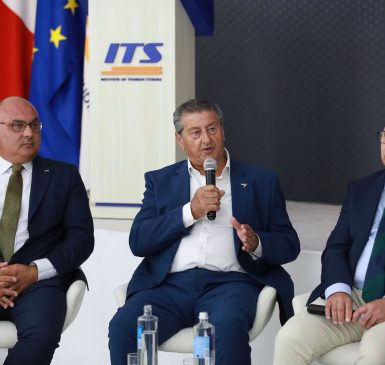
The President of the Malta Chamber of SMEs, Mr Paul Abela, participated in a panel...
The Malta Chamber of SMEs represents over 7,000 members from over 90 different sectors which in their majority are either small or medium sized companies, and such issues like the one we're experiencing right now, it's important to be united. Malta Chamber of SMEs offers a number of different services tailored to its members' individual requirements' and necessities. These range from general services offered to all members to more individual & bespoke services catered for specific requirements.
A membership with Malta Chamber of SMEs will guarantee that you are constantly updated and informed with different opportunities which will directly benefit your business and help you grow. It also entails you to a number of services which in their majority are free of charge and offered exclusively to its members (in their majority all free of charge).