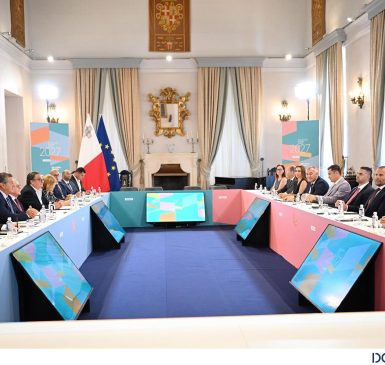
SME Chamber presents 40 Budget 2027 proposals, calls for productivity-driven budget and cross-party taskforce on Malta’s National priorities
16 September 2026
The Malta Chamber of SMEs has presented 40 proposals for Budget 2027 during a meeting...
Citizens and
firms moving to another EU country would face less red tape under a draft law
passed by Parliament. But this law, which would simplify procedures for proving
the authenticity of certain public documents such as birth or marriage
certificates, still needs to be approved by EU member states.
The law,
which lays down rules for testing the authenticity of public documents, but
would not require member states to recognize their contents, was passed by 573
votes to 62, with 44 abstentions.
Fewer administrative formalities
The law
would do away with administrative formalities of certain public documents, such
as those proving civil status, family relationship or intellectual property
rights. MEPs want more documents to be covered by simplified procedures and
propose for example that educational records, as well as tax and social
insurance documents, should be included. MEPs also beefed up rules designed to
facilitate acceptance of non-certified copies and translations.
Optional multilingual EU forms
The law
would also introduce new multilingual EU forms which citizens could use instead
of national ones to prove birth, death, marriage, registered partnership or the
legal status and representation of a company. MEPs also amended the proposal to
include a further eleven forms concerning name, descent, adoption, non-married
status, divorce, dissolution of a registered partnership and so on.
Safeguards against fraud
In the
event of reasonable doubt, the authorities would be able to check the
authenticity of a document with the issuing authorities, using the existing
Internal Market Information System (IMI).
16 September 2026
The Malta Chamber of SMEs has presented 40 proposals for Budget 2027 during a meeting...

11 September 2026
The Malta Chamber of SMEs is raising serious concerns over the impact of the new...
22 July 2026
The Malta Chamber of SMEs acknowledges the significant investment and continuous efforts undertaken over recent...
The Malta Chamber of SMEs represents over 7,000 members from over 90 different sectors which in their majority are either small or medium sized companies, and such issues like the one we're experiencing right now, it's important to be united. Malta Chamber of SMEs offers a number of different services tailored to its members' individual requirements' and necessities. These range from general services offered to all members to more individual & bespoke services catered for specific requirements.
A membership with Malta Chamber of SMEs will guarantee that you are constantly updated and informed with different opportunities which will directly benefit your business and help you grow. It also entails you to a number of services which in their majority are free of charge and offered exclusively to its members (in their majority all free of charge).